Local Service Page
Retaining Wall Contractor in Mississauga
Most Mississauga homeowners who look up a retaining wall are not chasing a decorative feature — they are dealing with a sloped Credit River ravine lot, a backyard that drains the wrong way, or a failing wall that needs to come out. We build retaining walls across Mississauga sized for Peel Plain clay, from estate properties in Lorne Park and Mineola to newer grades in Erin Mills and Churchill Meadows, with the engineering and drainage detail those sites actually need.
Quick answer: Seven Stones Landscape builds retaining walls across Mississauga — Lorne Park, Mineola, Erin Mills and nearby — for $400 to $1,500 per linear foot installed (2026), engineered on a compacted, drainage-first base sized for Peel Plain clay. ICPI-certified, $5M insured, established 2013.
What This Page Covers
- New retaining wall construction, full wall rebuilds, and structural grade correction across Mississauga
- Armour stone, segmental block, and geogrid-reinforced engineered wall options for Peel clay
- Drainage-first wall design that holds elevation, controls runoff, and survives Ontario freeze-thaw
Why Mississauga Homeowners Need a Qualified Retaining Wall Contractor
A retaining wall is a load-bearing structure before it is anything you look at. Across Mississauga it holds back grade on ravine lots above the Credit River, levels sloped backyards onto Peel Plain clay, supports pool decks and patios, and tidies front-yard transitions — all while resisting frost heave and the hydrostatic pressure clay builds behind it. Pick the prettiest stone but skip the base, drainage, or reinforcement and the wall starts leaning within a few winters.
We scope each Mississauga wall around the job it actually has to do: retain a slope, carve out level living space, replace a structure that has already failed, or anchor a larger backyard rebuild. That means reading how water moves across the lot, how much grade the wall is fighting, how heavy the chosen material is, and how the wall ties into the patios, steps, and lawn around it.
Many Mississauga wall projects also tie into interlock patios grading and drainage backyard landscaping and sod restoration. Planning them as one scope almost always gives a cleaner, longer-lasting result than bolting them on later.

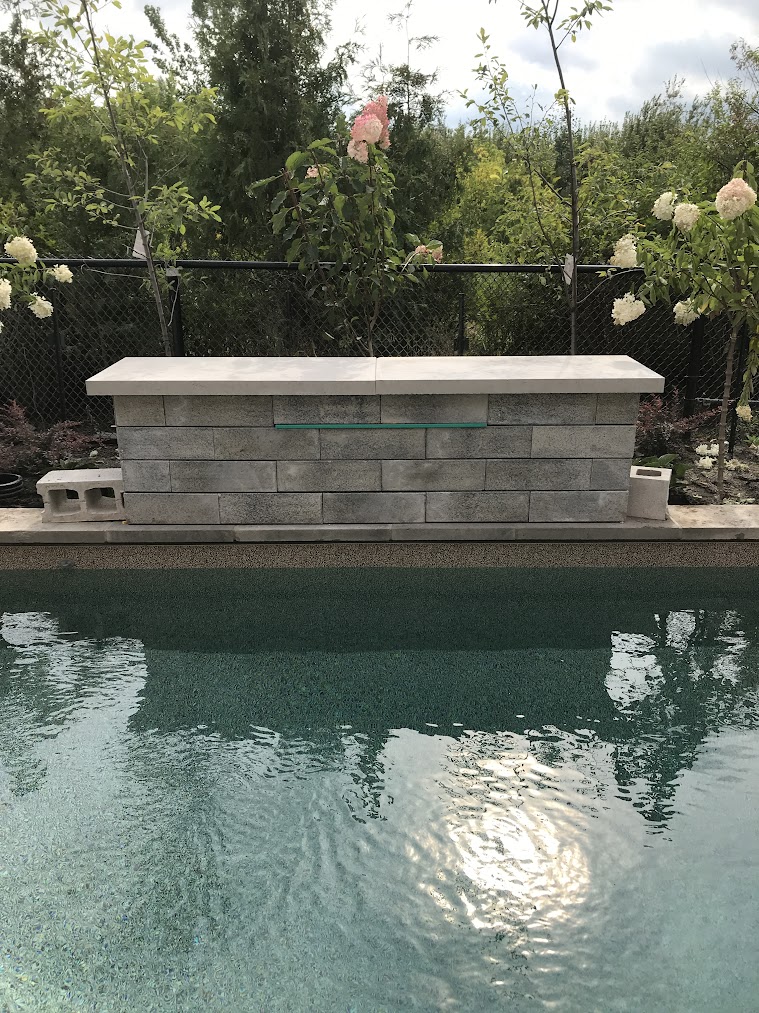
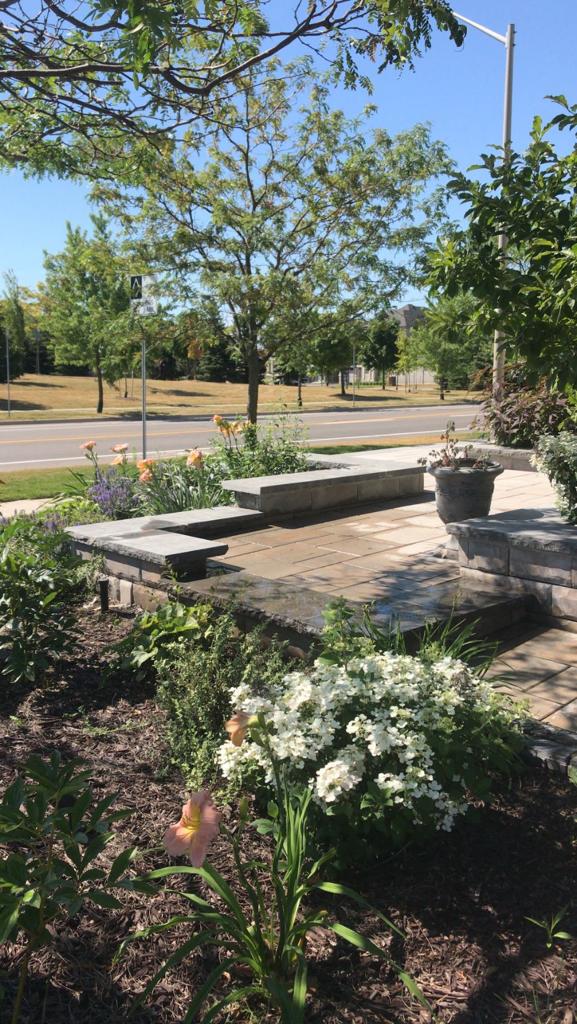

Common Retaining Wall Projects in Mississauga
- Wall rebuilds: Replacing leaning, cracked, or poorly drained walls — common on older Cooksville, Lakeview, and Applewood lots where the original wall had no drainage chimney.
- Terraced ravine walls: Stepping down the significant grade change on Credit River lots in Lorne Park, Mineola, and Sawmill Valley to create usable backyard terraces.
- Pool and patio support walls: Holding grade behind pool decks and dining patios so the finished surfaces stay level on clay subgrade.
- Front and side-yard walls: Cleaning up driveway transitions and side-yard slope on Erin Mills, Churchill Meadows, and Hurontario properties.
Choosing Between Armour Stone, Block, and Natural Stone
Mississauga homeowners usually weigh wall materials on two fronts: how they look and how they hold up. Armour stone — large pieces of Wiarton dolomitic limestone — gives a heavy, natural presence that fits the mature estate lots in Lorne Park, Mineola, and Credit Woodlands. Segmental block like Unilock Lineo Dimensional Stone, Unilock Pisa2, or Techo-Bloc Mini-Creta delivers crisp, modular lines that read well on newer Erin Mills, Lisgar, and Churchill Meadows homes. On the most demanding clay grades, Allan Block AB Stones tied back with geogrid give the engineered strength the Peel Plain subgrade requires.
The right call depends on wall height, the surcharge above it, drainage demands, budget, and the architecture of the home. We compare these options against the actual site — soil, grade, and water movement — rather than treating material as a styling choice separate from engineering and drainage.
What To Ask Before Hiring a Mississauga Retaining Wall Company
Ask exactly how drainage is handled behind the wall, what the base and backfill spec is, whether the wall is engineered and P.Eng-stamped where height requires it, and whether the contractor is designing it as part of the whole landscape. On Peel clay, those answers matter far more than which block colour you pick.
If the project also includes a patio, steps, or grade correction, ask how those scopes are sequenced together. A wall that stands fine on its own can still funnel water into a problem if the transitions and runoff around it were never planned. Also confirm who pulls the City of Mississauga building permit and, on ravine lots, who manages the Credit Valley Conservation or TRCA application.
For related planning, review our Mississauga landscaping page our retaining walls service page and our landscaping permits guide.
Mississauga Retaining Wall Projects Often Include
- Interlock patios when the wall creates the level pad for a seating or dining area
- Grading and drainage work to steer Peel clay runoff away from the wall and the house
- Backyard landscaping for full-property coordination on ravine and estate lots
- Steps and walkways where a terraced wall changes how people move through the yard
- Sod installation and restoration once the structural hardscape is finished
Retaining Wall Cost in Mississauga (2026)
Installed pricing by wall type, drawn from our Mississauga projects on Peel Plain clay — every quote includes the drainage chimney and daylight outlet.
| Option | Typical range (installed) | What's included |
|---|---|---|
| Segmental block wall (under 1 metre) | $400–$575 per linear foot | Unilock Lineo Dimensional Stone, Techo-Bloc Mini-Creta or Allan Block AB Stones on a compacted base with drainage chimney |
| Engineered wall, 1–2 metres (geogrid-reinforced) | $600–$1,100 per linear foot | Geogrid reinforcement tied into the clay subgrade, P.Eng-stamped drawings, full drainage field |
| Estate armour stone / natural stone wall | $850–$1,500 per linear foot | Wiarton dolomitic limestone in 3–8 ton pieces for Lorne Park and Mineola ravine lots, widened drainage on saturated grades |
Why Mississauga Homeowners Choose Seven Stones for Retaining Walls
On the Credit River ravine lots of Lorne Park and Mineola, the hard part is rarely the stone — it is holding a steep grade on dense Peel Plain clay that traps water and shoves a poorly built wall out of line within a few freeze-thaw winters. Homeowners come to us as a retaining wall contractor in Mississauga who builds drainage-first: a full-height chimney, geogrid tied into the clay, and a daylighted outlet that releases the pressure that topples shortcut walls in Cooksville. We have been a Mississauga retaining wall company since 2013, are ICPI-certified, Unilock and Techo-Bloc authorized, and carry $5M liability coverage, and on ravine lots we also manage the Credit Valley Conservation review up front.
Every project starts with a fixed written quote — drainage chimney included, no surprises — and is backed by our 5-year workmanship warranty. Book a free on-site Mississauga consultation: call (289) 700-0312 or request a quote online.
Frequently Asked Questions
Detailed Local Guidance for Retaining Wall Searches in Mississauga
When someone searches retaining wall Mississauga or retaining wall contractor Mississauga, there is almost always a real problem behind it — a slope that keeps eroding, a backyard sitting at the wrong level, or a tired wall that is starting to bulge. What they want to know is who can build it correctly on Peel clay, roughly what it costs, and whether it can fold into a wider yard plan without cutting corners on the finish.
That is why we treat a retaining wall as one part of the whole site, not a standalone ornament. The walls that last are the ones where drainage, alignment, the levels of the adjacent patio or lawn, and the final landscape transitions were all worked out together before the first course went down — and where the permit and conservation review, if the lot needs one, were handled up front.
How We Scope Mississauga Wall Projects for Long-Term Value
Some Mississauga walls are a focused rebuild of a structure that has already failed — often an older wall on Cooksville or Lakeview clay that was built without a drainage chimney. Others are part of a full backyard redesign on a Lorne Park or Mineola ravine lot, where the wall creates the terraces, privacy, and usable space that make the slope livable. We can phase the work or run it as a single design-build depending on budget, timing, and how complex the grade is.
When the same site also needs patio work or grading correction, we sequence those scopes so the finished project behaves as one drainage system rather than a set of disconnected pieces. That cuts the risk of rework and gives a cleaner, more durable result across the whole yard.
Retaining Walls in Nearby Cities
Same crews, same base specs, same 5-year workmanship warranty across the Golden Horseshoe.