Solutions Hub
Backyard Drainage in Hamilton, Burlington & Oakville
Backyard drainage problems show up as standing water, soft turf, and muddy pathways that linger days after storms. Across Hamilton, Burlington, Oakville, and the Halton clay belt, lot transitions funnel runoff into one low rear zone, we map the flow, regrade, and install French drains or swales that move it. Request a free on-site quote.

 Licensed & Insured
Related Project Photos


Problem Introduction
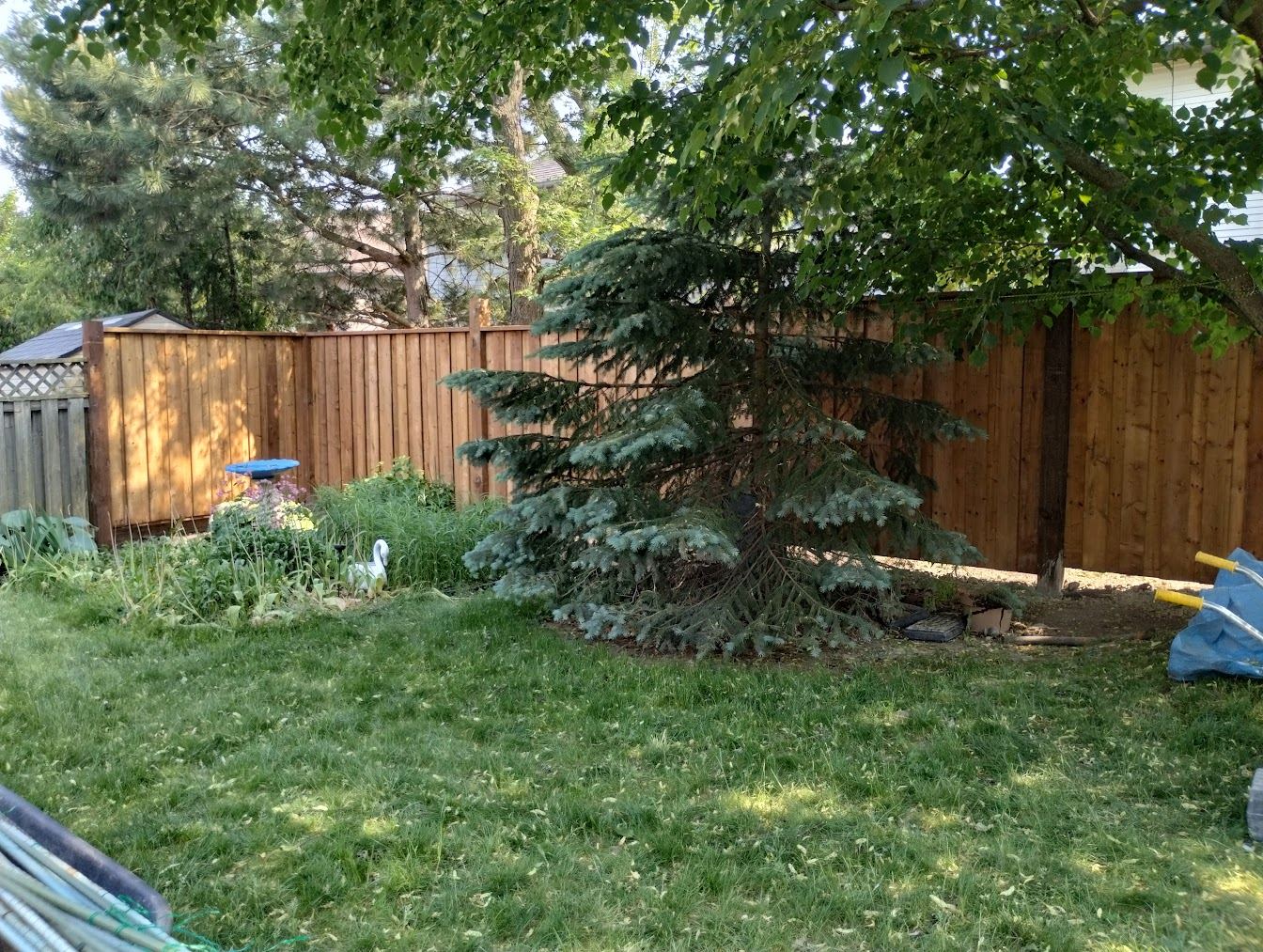
Backyard drainage problems often show up as standing water, soft turf, and muddy pathways that linger days after storms. In Burlington and Oakville, lot transitions can funnel runoff into one low rear zone, making lawns hard to use and maintain.
Why This Problem Happens
Common triggers include reverse grading, compacted clay subsoil, blocked swales, and downspouts discharging into low points. Even small slope errors can keep water trapped near patios, fences, and planting beds.
How Seven Stones Landscape Fixes It
We begin with a full drainage map, then regrade critical areas, restore flow paths, and install collection or conveyance components where needed. After hydraulic correction, lawn zones are restored so the yard recovers function and appearance.
Fix your backyard drainage with proper grading and drainage.
Yard Grading & Drainage Services →Local Considerations
Hamilton and Ancaster yards with dense soils often need grade correction plus capture points. Waterdown and Milton properties frequently require better outlet strategy for intense short-duration storms.
Related Services
- Interlock patios
- Retaining walls
- Sod installation
- Yard grading and drainage
- Concrete services
- Backyard renovations
City Pages
Before & After Case Example
A Milton backyard repeatedly ponded behind a patio. We re-established grade, added targeted collection, and tied into a controlled outlet. Standing water disappeared and turf health improved.
Action Plan for Homeowners
Backyard drainage planning should also account for neighboring grade influence, fence-line bottlenecks, and discharge continuity during prolonged rainfall. In Burlington and Oakville, minor lot transitions can redirect water unexpectedly after renovations. A complete correction plan maps intake, flow, and outlet behavior so performance remains consistent in both spring thaw and summer storms. This systems approach reduces recurring soft spots, protects hardscape edges, and keeps the yard functional for daily use. Backyard correction is one piece of a complete yard drainage plan, and on more exposed lots it pairs with steps to flood-proof your property before the next major storm.
Before we touch a shovel, walk the yard during a real rain and mark every spot that holds water for more than a day, then check where your downspouts actually let out. Most backyard drainage calls we get in Hamilton and Burlington come down to one of three things: a downspout dumping right at the foundation, a rear swale that has silted up and lost its fall, or a builder grade that was never tied into the neighbour's lot line. Snap a few photos at the worst of the rain so we can see the flow direction, not just the puddle that is left behind.
Get the surface grade right first, because no buried pipe fixes a yard that slopes the wrong way. We shoot elevations with a laser level, re-establish a minimum two percent fall away from the house for the first three metres, then decide whether a regrade alone carries the water or whether the low rear zone needs a French drain in 3/4-clear washed stone wrapped in non-woven fabric. On the heavy clay common from Ancaster up to Waterdown, we plan to move water off the surface rather than soak it in, since clay here takes well under an inch an hour.
Your lot does not behave like the one next door, even on the same street. A walkout that drains toward a low corner needs a different outlet than a flat Milton yard hemmed in by fences on both sides, and a yard that only floods at spring thaw is telling us frost is holding the subgrade saturated while the surface runs free. We size the intake, the pipe, and the discharge point for your specific fall and soil, then daylight the line at a permitted low edge or a dry well rather than risk an illegal tie-in to the storm sewer.
Once the water is moving, we re-sod the trench seam the same day and re-check the grade at the patio edge, the fence line, and around any planting beds so the fix does not just shove the problem ten feet over. A backyard that dries within hours instead of days keeps its turf, keeps the patio base from staying wet, and stops the slow erosion that undermines edges over a few freeze-thaw winters.
Backyard drainage should be reviewed as a system that includes lawn grades, hardscape edges, and roof-water discharge points.
When all components are aligned, homeowners get faster dry-down times, healthier turf, and fewer seasonal maintenance problems.
Frequently Asked Questions
Need Help With This Problem?
We provide practical local solutions across Hamilton, Burlington, Oakville, Ancaster, Dundas, Waterdown, Stoney Creek, and Milton.