Solutions Hub
OBC 2% Slope and Lot Grading Explained: Why Grading Fails on Clay
This is a plain-language explainer of the Ontario Building Code 2% slope rule, how lot grading actually works, and why grading so often fails on Ontario's clay soils. Understand the standard first, then see your options. Explore our yard grading service.
Related Project Photos

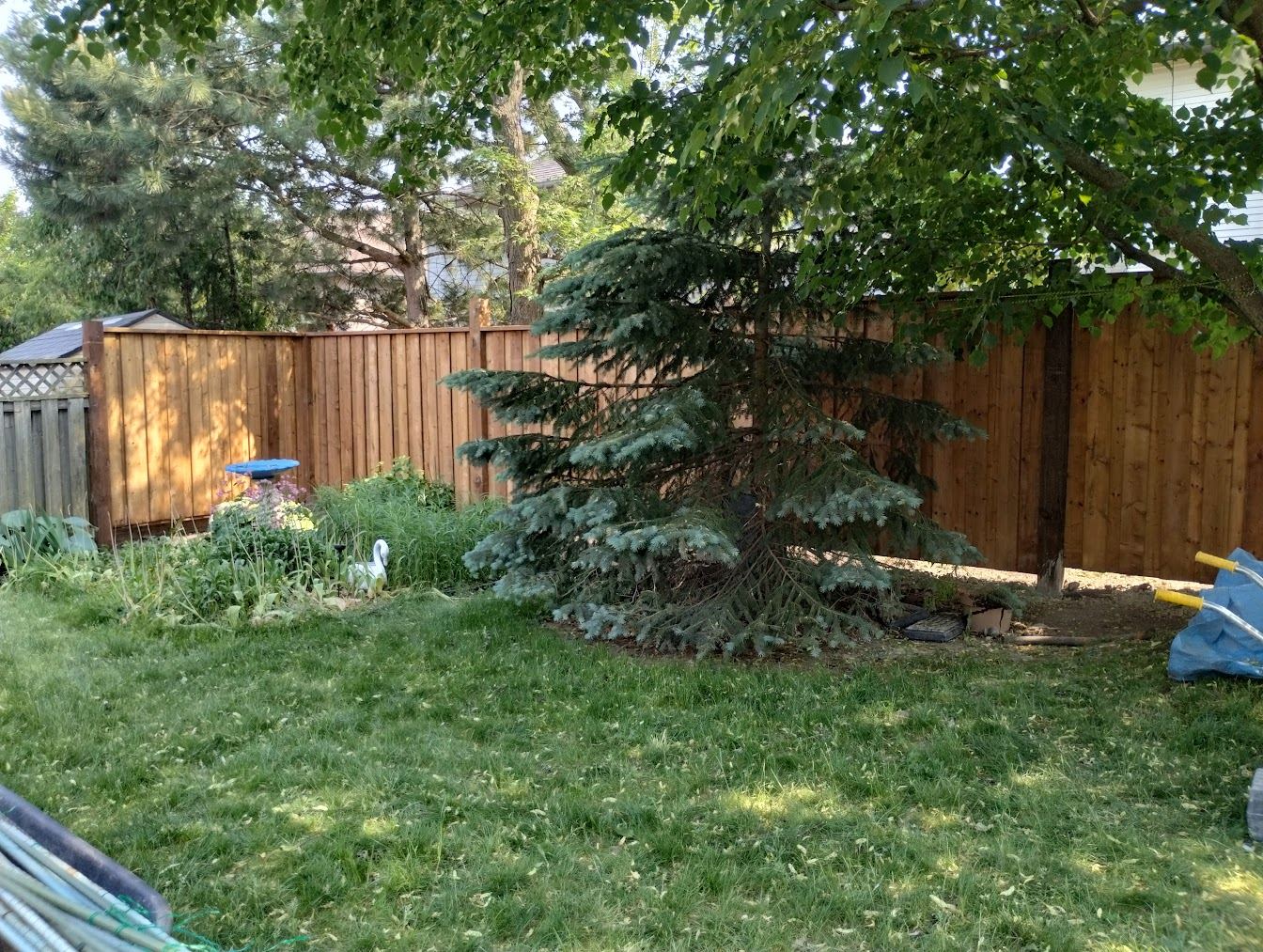
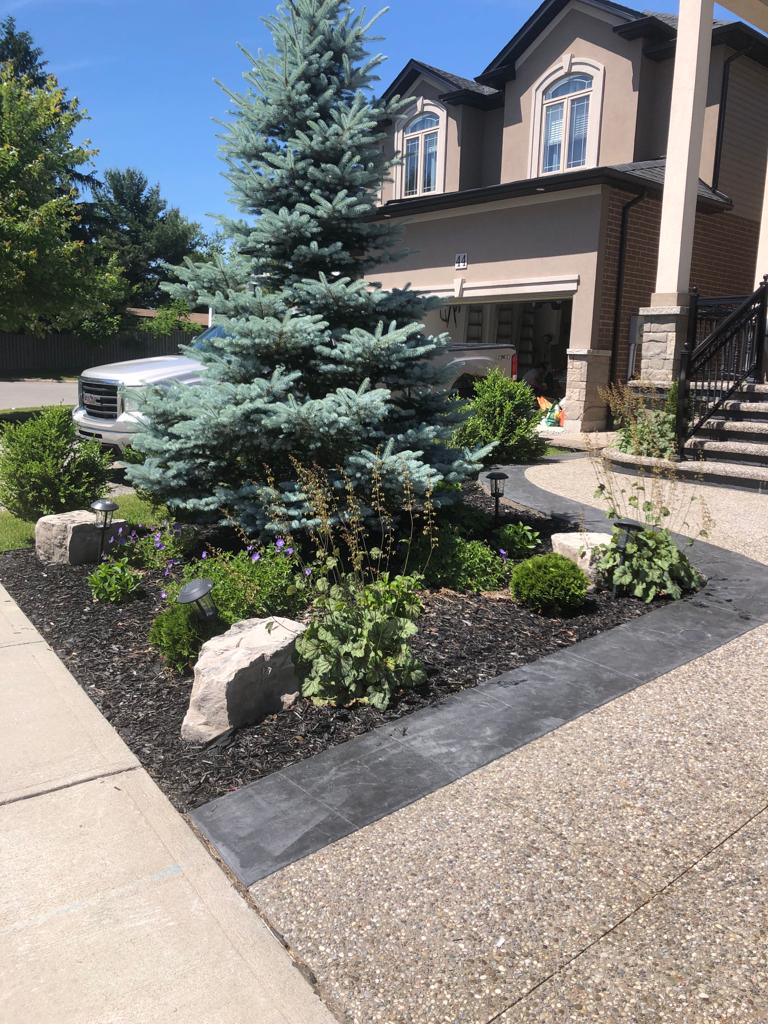
What the OBC 2% Slope Rule Means
The Ontario Building Code and industry standard call for a minimum 2% slope away from the foundation, roughly 6 inches of fall over the first 10 feet. This explainer covers what that rule means in practice, how lot grading is set and recorded, and why so many yards still pool water even when they look level. Symptoms like ponding, settlement, wall stress, and recurring wet zones usually trace back to a grade that no longer meets this standard.
Why Grading Fails on Clay
Clay soils hold water and swell, then shrink and crack as they dry, so a grade that met the 2% standard at construction can flatten or reverse over a few seasons. Disconnected elevations, shallow swales, blocked outlets, and poorly integrated hardscape transitions keep water where support layers should stay dry, and freeze-thaw cycles then magnify every defect. This is why clay-heavy lots lose their slope faster than sandy ones.
How Seven Stones Landscape Fixes It
We treat grading and drainage as the foundation of long-term site performance by defining runoff paths, setting target elevations, coordinating collection, and aligning hardscape-softscape transitions.
Local Considerations
Homeowners in Hamilton often experience patio sinking due to freeze-thaw cycles, and the same pattern destabilizes yards lacking proper grading strategy. Burlington and Oakville projects benefit from clay-aware drainage planning.
Related Services
- Interlock patios
- Retaining walls
- Sod installation
- Yard grading and drainage
- Concrete services
- Backyard renovations
City Pages
Before & After Case Example
An Ancaster backyard renovation had recurring water issues across lawn and patio edges. We redesigned elevations as one system and implemented phased corrections that stopped repeat damage.
Action Plan for Homeowners
Once you understand the 2% rule and how clay undermines it, the fix is straightforward in principle: re-establish positive slope and, where the soil cannot shed water on its own, add collection. When elevations and runoff routes are coordinated from the start, patios, lawns, walls, and concrete features all perform better. To correct a failing grade on your own lot, our yard grading and drainage service handles the regrade, sod, swales, and drains end to end. For the wider picture of how grading fits with French drains, catch basins, and sump discharge, read our broader yard drainage in Ontario guide, which is why we set elevations before any drain or finish work begins.
Start by checking your own grade against the 2% number rather than guessing. Run a string line and a level from the foundation out 10 feet, you are looking for roughly 6 inches of drop, and mark wherever the ground goes flat or tips back toward the house. Then watch the yard during the next real storm and again at spring thaw, because that is when a clay lot that looks fine in July shows you where it actually holds water. If your home was built after 2005, dig out the lot-grading plan the city has on file before changing anything, since that recorded elevation is the standard your regrade has to respect.
The mistake we see most often is treating a slope failure as a drainage failure and burying a pipe to chase the symptom. On clay, a French drain in the wrong spot just collects the water a reverse grade keeps sending it, and the pooling comes back the next wet season. Get the elevations right first. Re-establish positive fall away from the foundation, and only then decide whether the soil can shed water on its own or genuinely needs a swale, catch basin, or sump discharge to finish the job. Setting that order is what keeps a grading project from becoming an annual repair.
The 2% rule is a minimum, not a recipe, and the right approach depends on what your specific lot is made of. A sandy Oakville yard may hold its slope for decades, while a clay-heavy lot in Hamilton or Ancaster can flatten and reverse in a few freeze-thaw seasons as the soil swells and shrinks. We read the subgrade, the existing hardscape, and how the swelling behaves through Ontario winters, then size the regrade to that behavior instead of laying the same fall everywhere.
Because grade sits underneath everything else, a correction done properly protects the rest of the property at the same time. When we reset elevations we coordinate the lawn, the patio edges, the driveway transition, and any retaining feature as one connected surface, so water leaves cleanly without pushing the next problem onto a wall footing or a paver base. Done as a system, the regrade gives patios, sod, and concrete a stable foundation rather than fixing one zone while loading the next.
Yard grading and drainage planning creates the performance baseline for patios, walls, lawns, and future landscape investments.
When water movement is engineered correctly, the entire property experiences fewer recurring repairs and better long-term stability.
Frequently Asked Questions
Need Help With This Problem?
We provide practical local solutions across Hamilton, Burlington, Oakville, Ancaster, Dundas, Waterdown, Stoney Creek, and Milton.