Solution Guide
Curb Appeal ROI: Which Landscaping and Hardscape Upgrades Add Value First
Homeowners in Oakville, Ancaster, Burlington, and across the Golden Horseshoe usually ask the same question in different ways: if I am going to invest in the front of the property, what should I do first? The best answer is not one trendy feature. It is the group of upgrades that improve appearance, function, and structural quality at the same time.
The Upgrades That Usually Matter Most
- Driveway rebuilds and front-walk upgrades: the most visible surfaces often shape the entire first impression.
- Front steps and entry transitions: buyers and guests notice safety, proportion, and finish quality immediately.
- Grading and drainage correction: a beautiful entry loses value fast if water pools, edges settle, or surfaces heave.
- Lighting and clean planting structure: these help the home read as maintained and intentional instead of cluttered.
These projects create ROI because they solve real problems while also improving appearance. A driveway that drains correctly, a front walk that feels substantial, and steps that are safe and properly proportioned all carry more value than purely decorative features with no structural benefit.
Why Surface Quality Has an Outsize Effect
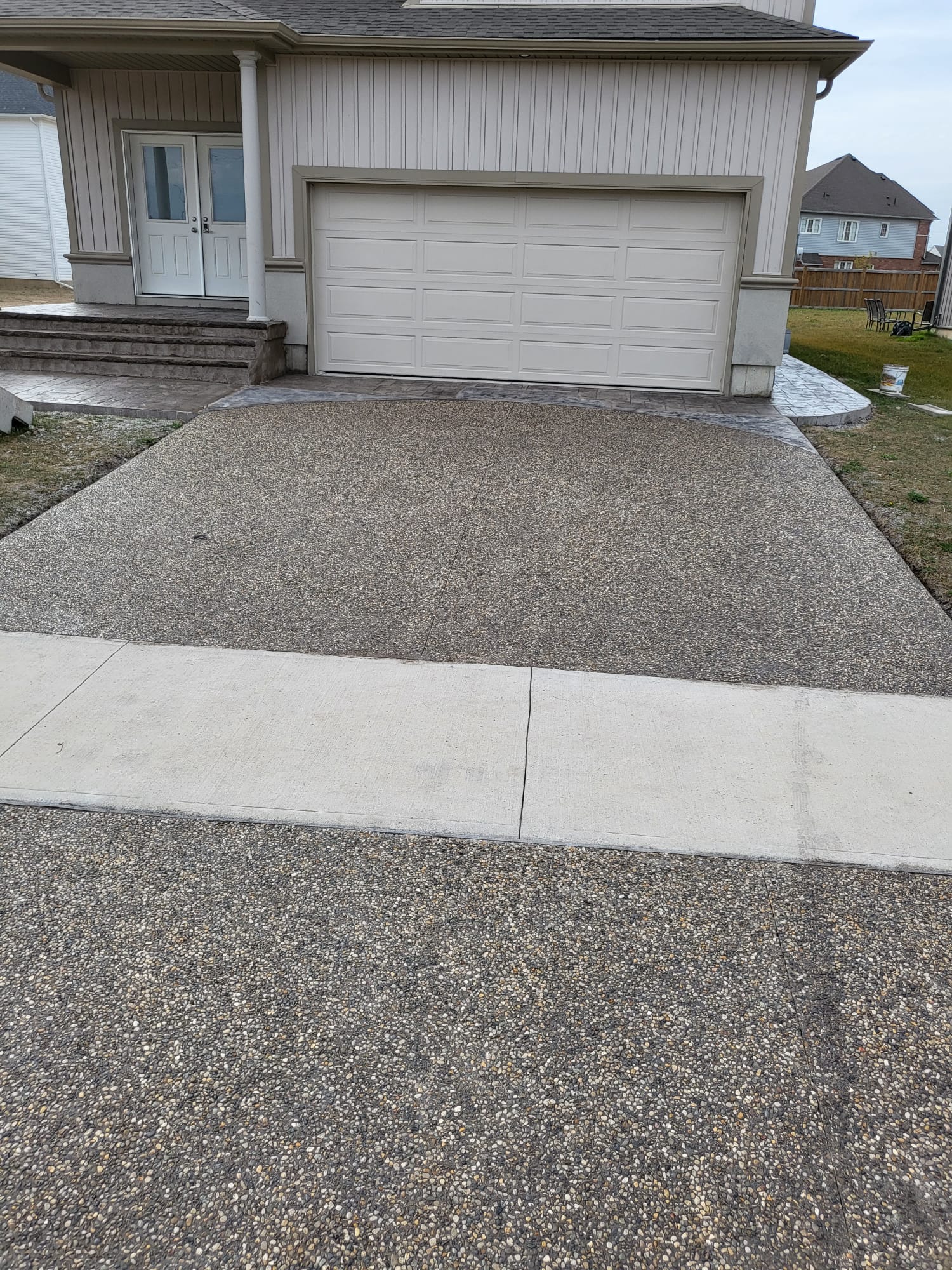
The approach to the home is where curb appeal is won or lost. Visitors and buyers see the driveway, front walk, steps, and immediate grading before they notice subtle details. If those core surfaces look uneven, patched, or undersized, the whole property feels less polished. When those same elements are rebuilt with stronger proportions, better materials, and clean transitions, the home immediately feels more cared for and more valuable.
That is why premium properties in Eastlake, Joshua Creek, Roseland, Oakhill, and similar neighborhoods often prioritize hardscape first. Wide, balanced walkways. Crisp drive edges. Durable front steps. Low-maintenance materials that do not look thin or temporary. These upgrades do not just photograph better. They change how the property is experienced in real life.

The ROI Rule Most Homeowners Miss
A visually strong upgrade only creates good ROI if it lasts. That means drainage and prep cannot be an afterthought. If the front walk settles, if the driveway edge fails, or if runoff stains the entry after the first hard season, the project loses value quickly. For that reason, the highest-return upgrades are usually the ones where structural performance and appearance are planned together.
This is also why the cheapest quote is often not the best value. Lower numbers frequently exclude base depth, edge restraint, proper demolition, or grading correction. On day one, the surfaces may look similar. Over time, the difference becomes obvious. The front of the home is a high-visibility zone, so workmanship shows.
How to Prioritize Projects by Budget
If budget is tight, start with the feature that most affects both function and impression. For some homes, that is the interlock driveway. For others, it is the front steps and walk. If the grade is poor, drainage may need to come first even if it is less visible. The goal is not to do everything immediately. It is to choose the first phase that makes later upgrades easier and protects the investment you are about to make.
A common sequence is: fix grade and drainage if needed, rebuild the front walk or steps, then upgrade the driveway, and then finish with lighting and planting. That sequence keeps the visible transformation moving while reducing the chance of rework. It also makes sense for homeowners who want to phase the spend across seasons without ending up with mismatched surfaces or duplicated labor.
For local pricing context, read our Ontario landscaping cost guide. For inspiration, compare 2026 curb appeal trends and our curb appeal upgrade ideas.
When Curb Appeal and Drainage Should Be Planned Together
Many of the highest-value front-yard projects are actually hidden drainage projects in disguise. The homeowner wants a cleaner entrance and a stronger first impression, but the old front walk has settled because water collects along the edge. The driveway has dipped because runoff keeps saturating the base. The lawn near the porch looks thin because grade directs water toward the entry. In those cases, drainage is not a separate project. It is part of creating real curb appeal.
That is why we often connect front-entry scopes to grading, retaining, or drainage recommendations early. You can learn more in our flood-proofing guide and compare material choices in our flagstone guide if you are planning a premium front walk or landing.